
To this day, I experience chills thinking of the first time I listened to “Still D.R.E.” The drums literally forced my speakers to bow down. Back then, I used to play around with a cracked version of software, and I wondered why my beats sounded like they were produced in a coffee can, unlike Dre’s, which were godlike.
I later learned that the secret wasn’t some studio magic; rather, it was compression. Although, it wasn’t the kind taught on YouTube, where everything comes out as a lifeless boxeller. Instead, it is the compression. I mean the fun and creative version of compression that can transform your bedroom recordings to be on par with the mighty radio.
Creative Compression: How To Level Up Your Experience
I won’t lie, I spent too many years far removed thinking compression was an annoying technical thing to deal with – like flossing your teeth, something you know you should do, but it’s boring as hell. Then one day, my mentor, who worked with emcees like Biggie and Eminem, picked my mouse for surgery-level knob twisting.
“Stop thinking about compression as a tool,” he said, “It can be your secret weapon.”
That’s when I made the breakthrough. When you part with cash to buy rap beats in USA, you don’t just get loops and samples. You get years of mastery in compression that makes everything sound ready for a platinum album.
Techniques to Actually Move the Needle
1. Parallel Compression: The Hulk Method
Ok, imagine this: your original drums give you Bruce Banner and your compressed copy gives you the Hulk. Bruce is civilized and well-behaved, but you need the Hulk’s raw power too. That’s what parallel compression lets you do.
Here’s the process I follow:
- Make a duplicate of my drum track (literally copy and paste it)
- Crush it to death with compression. I mean settings that would make a normal engineer cry.
- Use fast attack, medium release, and enough gain reduction to flatten a truck.
- Blend it back in at maybe 20-30% (this is where the magic happens)
- Listen to your drums suddenly sound like they cost $10,000 to record.
The outcome? Drums that hit like a heavyweight boxer, yet breathe like a jazz musician. Most hip hop beats for sale in USA use this because it’s pretty much cheating, but the legal kind.
I’ll never forget the first time I nailed this technique. I was doing a beat for this local rapper, and when the drums dropped, he literally jumped out of his seat. “Yo what did you just do?” That’s when I knew I found something special.
Read More About Which Audio Interface Delivers the Best Results for Pro Recording?
2. Sidechain Compression: The Heartbeat Effect
This might sound strange, but bear with me. Think of the kick drum as the heartbeat of your track. Each time it plays, everything else in the mix takes a tiny step back, as if they are bowing to it.
Let me share my process with you:
- Sidechain your kick drum to compress other elements like bass, pads, and vocal samples
- Set your compressor to a fast attack and medium release
- Change the threshold so the compressor activates with every kick hit
- Maintain light compression for a breathing effect rather than a chokehold
- A gentle pulse should be created as everything blends.
I remember working on this track where the sidechain compression was so spot on that my girlfriend, who usually zones out when I’m working, started dancing in the kitchen. She couldn’t hear the entire beat, only the low-end that bled through my headphones, but that pulse was so contagious.
3. Multiband Compression: The Surgeon’s Approach
The best way to describe the difference between regular compression and multiband compression is from a physician’s viewpoint. Regular compression is a sledgehammer approach; it works like brute force. Multiband compression is like having a carefully engineered scalpel that increases precision to certain frequencies.
Here’s how I use it:
- Focus on notching specific frequency bands out of a signal.
- Compress the muddy low-end without touching the crisp highs.
- Control the harsh midrange frequencies that tend to cut through the mix.
- Shape clarity in the top end without dulling the entire track.
- Solve issues while preserving the healthy sections of your mix.
Advanced Audio Techniques that Separate The Professionals from Amateurs
“Glue” Compressor: Making Everything Play Nice
There are times when I may spend hours perfecting individual tracks, and I realize that they sound like they were recorded miles apart. This is where bus compression comes in – I call it the relationship counselor of audio processing.
I use super gentle settings with slow attack and release times. The goal isn’t to compress everything dramatically—it’s about blending everything together. When someone listens to exclusive beats for sale, they should feel like everything was crafted by a single person with a clear vision, not put together by different people.
Compression as an Instrument
Here’s something that amazed me the first time I heard it: compression can be overly aggressive to the visiblity of a piece. At times, I will go out of my way to use it as harshly as possible so that it becomes a part of the musical arrangement.
Try this wild exercise: take a vocal sample and compress it so hard that it turns into a rhythmic pattern. Or use super-slow release times to provide sustain in places where it is non-existent. I’ve designed entire hooks from these creative compression ideas, and they always amaze me.
Once, I mistakenly set my compressor release far too long on a snare hit. Instead of fixing it, I decided to keep it because it added this breathing feel that ended up being the standout sound of the whole track. The artist later ended up claiming it was his favorite beat ever.
The “New York” Style: More Sophisticated Parallel Compression
This strategy works wonders for selling rap beats online. It feels like parallel compression went to culinary school and returned with a master’s in awesome.
To achieve this, I copy the whole mix, compress it heavily, and then apply a high-pass filter to get rid of the thick low-end. It allows me to blend in all of the punch without any the unwanted sounds. It’s like getting compensated in cake, and then the cake makes people want to rap over it.
| Find the Perfect Rap Beat for Your Next Track Get exclusive access to top-tier rap beats from JBZ Beats. Whether you’re building your next hit or refining your sound, our high-quality beats help your music stand out in today’s competitive scene. |
My Personal Compression Setup (After Years of Mistakes)
Here’s a robust system that works every single time after going through every mistake in the book:
My tried and tested three-layer system:
- Individual Track Compression: So individual elements like vocals or guitars get gentle compression, but only enough to keep the peaks in line.
- Bus Compression: Similar elements grouped together like all drums or all melody parts are then compressed.
- Mix Bus Compression: The beat receives final polish compression so all layers sound cohesive together.
- The Secret: Unlike other approaches where levels of compression are added that conflict and cancel out, there is one specific job each compressor does, each work together like a team.
- Pro Tip: Starting from light and gradually increasing is always best when it comes to compression because you can always add, but once added, what has been squashed significantly cannot be taken back.
When you buy hip hop beats, this is what professionals spend their time on. It is not the sounds alone that customers look forward to, but the years of experience that went into shaping the sounds are priceless, and this layered approach is what you’re really paying for.
Pitfalls That Will Ruin Your Beats (Take it from Me, I’ve Been There)
Here are some of the bad mistakes I made with beats:
- Overusing compression: this blasting the “life” out of the beat makes it sound as if the song is being transmitted over a walkie-talkie.
- Attack times that are wrong: too fast causes loss of punch while being too slow makes loss of control. It is a balancing act.
- Ignoring genres: A rap beat is different from pop beats or EDM. You cannot use the same settings for every genre.
- Makeup gain neglected: Volume compensation must be made for any reduction. This makes ensure “fixes” do not just sound quiet.
- Using compression to resolve mixing issues: Band-aids fixing bad arrangements do not resolve locking problems or poor recording.
Spoiler Alert – Not What You Think The Tools Are.
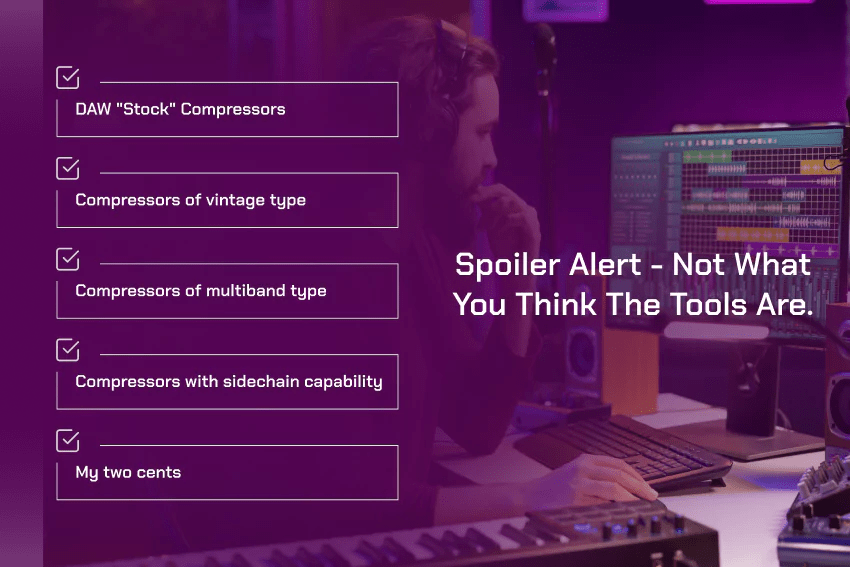
Here are the essential tools everyone needs to have:
- DAW “Stock” Compressors: I for one always start here because they tend to offer more value than most people give credit.
- Compressors of vintage type: Needed for warmth, vintage types add great character.
- Compressors of multiband type: One good multiband compressor is essential and a necessity when it comes to frequency control.
- Compressors with sidechain capability: An essential feature used in modern rap production – no exceptions.
- My two cents: The best compressors are the one you you know how to operate properly – get basics first then purchase additional tools.
Making Your Beats Impossible to Ignore
While buying rap beats online, observe the ride the beat takes you on. A professional beat should keep your attention as energy levels remain consistent from cue to cue, a start to a finish. They possess genre appropriate dynamics and that polished “bought” sound that separates amateurs from professionals.
Balancing turns out to be a mix of knowing when to hold back and when to go all out. A gentle hand works wonders – think of a calm self-reflective tune. Other times, a compressor marvel needs to be pushed to its limits.
What You Should Do Next to Become a Compression Master
Here is your action plan to achieve compression mastery:
- Start off with parallel compression for drums – it is forgiving enough that you can’t mess it up too badly but forgiving enough that you can’t mess it up too badly.
- Investigate reference tracks as if you are a detective – think of what compression techniques could be in use.
- Let loose and try to do whatever you want – the majority of my great breakthroughs were unplanned and came from random and “what if” ideas.
- Work on different styles – all genres have their unique approaches for compression that need to be catered to.
- Experimented and documented what works and what doesn’t – this way, you build and refine your personal compression techniques.
- Try breaking the norms a bit – creativity stems from things that defy “the norm” but work in mysterious and unexpected ways.
Read More About The Key Advantages of Using Tailored Hip-Hop Beats
Tired of Making Beats That Blends Into The Crowd?
I could write an entire book on the various techniques of compression, and maybe one day, I will. But for now I want to say that real exploration begins when you start trying out these approaches. I am sharing these techniques because they have helped me in creating beats that can be played at parties instead of simply collecting dust on SoundCloud.
If you’re trying to make music for yourself or make a business out of it, mastering creative compression will set you apart from others who just use it for keeping levels in check.
What You Can Do Right Now: Get onto your DAW and load a beat you are currently working on. Try applying parallel compression to the drums. You will hear the difference straight away. After that, try other methods, and I’m sure your beats will be thankful, and even the people who hear them will be thankful too.
About JBZ Beats
JBZ Beats offers top-quality Hip Hop Beats, Rap Beats, and Instrumentals, all in professional streaming quality. With flexible leasing options — Basic, Premium, and Unlimited — it’s easy to find the right fit for both emerging and established artists. Perfect for mixtapes, YouTube and Facebook videos, ads, and even iTunes releases, these beats are designed for maximum versatility. Artists can access high-quality Rap Beats online at affordable prices and download royalty-free music instantly after purchase.
Stop sleeping on your potential. Start now by browsing their extensive catalog and creatively elevate your next project. Buy rap beats online now at JBZ Beats and you will notice the great difference professional production brings.
FAQs
Is there a difference between regular compression and creative compression?
Regular compression manages dynamic range; it restricts loud sounds, and creative compression differs so much that it brings a whole new vibe to the sound. While some people think it’s a tool that a sound engineer operates, to me it is a DJ who shapes the sound by adding punch, groove, and energy.
What about on rap beats?
To begin with, I set the gain to anywhere from 2 to 4 dB and tweak the settings from there. Unlike other genres, rap beats can withstand more compression. But just as with all other genres, there’s a point beyond which you must stop. If the beat starts sounding like it’s coming from a phone speaker, then you need to change things up. And remember, regardless of what’s shown on the meters, always trust your ears.
Can I use compression on every element in my beat?
Certainly, but a reason for every compressor used should exist. For instance, gentle compression on individual tracks, stronger compression on their buses, and creative compression allow me to use it for effects. What this means is that there is a purpose in every compressor as opposed to treating it like food seasoning, where patching them all on will add flavor.
What is the best compressor for making rap beats?
The best compressor is the one you know how to use since understanding your equipment is essential. It doesn’t matter if the equipment is expensive or cheap; know-how and the gear is what give the radio-ready beats. In my case, I have used free stock compressors, and I have heard beats made with expensive gear that were unlistenable. At first, focus on fundamentals, and after you’ve mastered the basics, put your focus on gear acquisition.
How do I know if I’m over-compressing my beats?
Overcompression will make your beats sound boring and lifeless. On top of that, they will sound as if they are being played through a pillow. The drums lose their punch while the mix starts to feel overly squeezed. Some people might even hear weird pumping noises in the mix. If you haven’t seen people nodding their heads to your beats, trimming down the compression is usually the reliable fix. When in doubt, adding more space tends to work too.

