
The music industry, like any other, has been impacting the world on the palm of our hands and has changed drastically with the development of technology. Artists can now give up on the old times when one used to get tangled up in physical studios and record on vinyl. Now, the producers who sell rap beats for sale and musicians who buy hip hop beats online are part of a vast online world. It is quite sophisticated but, quite sadly, has an equal amount of hidden environmental cost. Now, as streaming services are dominating the industry and exclusive beats are for sale on purchase beats now, it is very important to understand the environmental impact of music we consume digitally.
The Digital Music Revolution: Two Sides of The Same Coin
The first chunk of digitally produced music seemed like an environmental benevolence. The old packing into plastics associated with discs, transportation, and transportation added to an environmental cost. The first glance of removing would indeed seem like a step towards a more eco-friendly world. But, as it turns out, the situation is more complicated than how we want it to be.
Every time an artist sells (makes) rap beats online or releases a new song on a streaming platform, they are part of an ever-expanding construction that uses an exceptional quantity of energy. The system is triggered simply when someone searches for rap beats for sale in USA. Other smaller actions contribute to the aforementioned as well. Other actions include streaming a song or downloading an album, and all culminate towards that same conclusion. The worldwide data centers are triggered, and in consequence, energy and heat are generated.
The Carbon Footprint of Your Favorite Playlist
Let’s look at it this way: for every hour spent listening to music, one can expect to exhale 6-8 grams worth of carbon dioxide. In this case the phenomenon might be termed “lackadaisical.” However, if one were to multiply it by the user base of the planet, the results would be shocking. Currently, the music streaming industry has a record 200 to 350 million kilograms’ worth of carbon dioxide, and this has culminated in a result that can be compared to the emissions of hundreds of thousands of vehicles.
Read More About Cheap Rap Beats, Big Impact: Find Your Next Hit Today
Digital Music Production: The Invisible Energy Consumer
Studio-to-Cloud: The Energy Journey
Modern music production, especially when completing beats for sale online, has no less than 6 unique phases, all of which use energy:
Recording and Production Phase:
Every Digital Audio Workspace that is housed in the fastest computational systems ends up dominating a significant quantity of energy. In other scenarios, fully equipped professional studios that house a plethora of monitors, processors, cooling systems, and other supporting structures end up consuming energy at a capacity equivalent to a small-scale industry.
There must exist some file storage details. Instrumentals for sale are unique. Each hip hop beat made will occupy some space on the servers. Hence, cloud storage Once purchased, the producers’ instrumentals for sale will be available for the producers.
Distribution Networks:
The Center for Philosophy of Science. Data centers that connect continents beat the clock. Each of the continents, along with her countries, goes through the file transfer processes when an artist buys beats from sellers from the USA. Each of them pays a certain cost for every single file that is being transferred.
Streaming Services: The Way to Save the Most from Nature
The Offensive Environmentalists
Other than the internet towers, popular streaming platforms are giant slab data centers on geo. One of several other of her, faster data centers that are available to get paid to do rap instrumentals is a huge slab of the tech belt and is part of the super-sized of the super-sized of the super-sized.
There are more than one data centres available, and every single one has the ability to beat the environmental impact of a oday city. The only thing that changes is the cost of the file being transferred. Taken on a temperature scale, these facilities are the number one biggest **tech “hunters” of the planet. Each one of them claims to burn a billion dollars worth of useless electricity every day.
Impact on a Region: USA Music Consumption
One of the largest markets for music globally is the United States. It is also the largest contributor to the environmental footprint digital music creates. The activities of the American consumers who stream music and purchase rap beats online are the key factors that drive data center activities on the country’s eastern and western coasts where major tech companies have their primary facilities.
The Manufacturing Chain: The Invisible Effects of Hardware
Production of the Devices
Hip hop instrumentals for sale and the smartphones and laptops that are utilised to play music on these are all part of the infrastructure for digital music that requires the use of Earth’s rare minerals. Mining them causes extreme environmental degradation and the loss of entire ecosystems, along with water sources that are polluted and vile.
Lifecycle of a Device
On average, smartphones that are used to stream music and purchase beats for sale are replaced every two to three years. This practice is considered to also contribute to e-waste, with more than a million devices thrown away every year.
The Music Industry’s Inclusive Approach to Sustainability
Use of Green Energy
Some companies use solely renewable sources and green energy to power their business, and this is most notable in the music tech industry. The use of solar and wind energy in data centres has greatly decreased the overall digital music distribution carbon footprint.
Efficient Coding and Compression
Advanced audio compression enhances audio file formats and removes unneeded information without loss of audio quality. Reducing file sizes means decreased data transfer and less energy consumption when users download rap beats or stream music.
Local Content Delivery Networks (CDNs)
By caching popular tracks closer to users, CDNs shorten the distance files travel over the internet and decrease energy used to transport the files. This is important for local markets such as rap beats USA.
|
|
Individual Steps: The Role of Music Consumers
Sustainable Use
- Download vs. Stream: Offline users waste less energy as compared to online users when the file is streamed multiple times.
- Listening Quality: Standard quality audio is less data used than lossless audio.
- Preserving Devices: Keeping devices longer and properly recycling used devices.
- Green Labels: Choosing to buy hip hop instrumentals from producers and labels that are environmentally conscious.
Responsible Use of Funds
When purchasing premium beats for sale and exclusive rap instrumentals, consider supporting producers that use renewable energy in their studios or cover the cost of carbon offset through environmental activities.
The Future of Sustainable Music Production
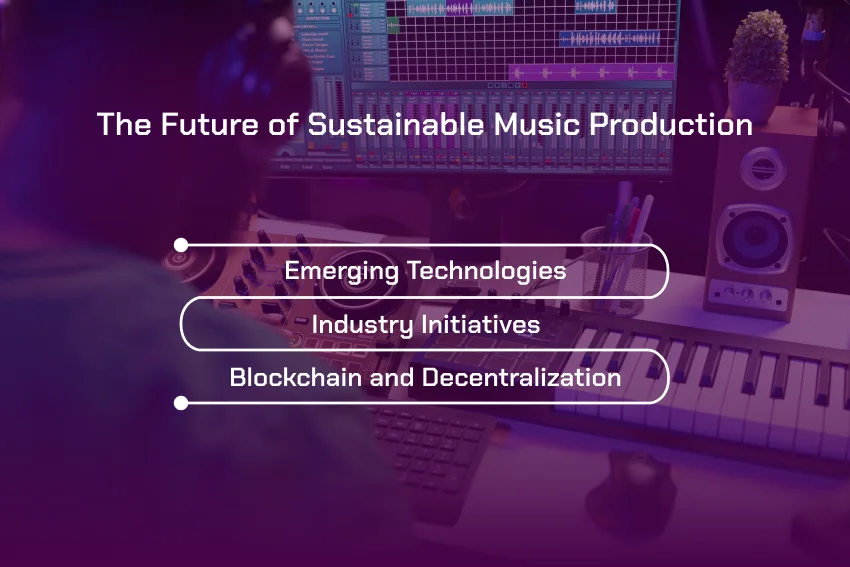
Emerging Technologies
AI and ML are fine-tuning algorithms for music recommendations and cutting down on unnecessary data transfers by predicting user behavior. These accuracy gains will further reduce the environmental impact of music discovery.
Industry Initiatives
The record labels and streaming services operators are making bold strides by pledging to become carbon neutral. These pledges involve the purchase of carbon offset credits and the investment on data center renewable energy as well as cooperating on reforestation programs.
Blockchain and Decentralization
Promising innovative distribution models, new blockchain-based music platforms are expected to lessen the environmental cost of buying beats online and music streaming.
Read More About : Which Beat Works for You? Exclusive vs. Non-Exclusive Explained
Conclusion: Striking the Right Note for Our Planet
The impact of music on the environment and the ecology is still a complex and multifaceted question. It requires sincere and focused efforts, both personally and as a fraternity, to shift the paradigm. Each and every one of us can consider him or herself an impactor, as long as we focus on the good and positive irrespective of how small the action is, like streaming a playlist or buying beats for sale online.
The music industry must accept and consider the fact that consumers are gaining awareness of the environment. The music industry is advised to adopt long-term methods and deal with sound energy and emerging technologies. Everyone, from the largest users of streaming services to the most amateur of sound producers selling custom rap beats online, must be willing to change their practices to encourage a shift to a kinder, greener, more sustainable approach to digital music.
JBZ Beats will always honor its pledge of social responsibility while offering industry-standard hip-hop beats, rap instrumentals, and exclusive music across the USA. For mixtapers, YouTubers, businesses, and even iTunes uploaders, our Basic, Premium, and Unlimited Leasing plans fit all of your creative needs at a fraction of the cost. We are the only website providing competitive pricing on rap beats online while being sustainable in practices for the distribution of digital music. Download royalty-free music today and help us contribute towards a cleaner music community!
Do you want to help us with our mission? Start practicing conscious music listening and supporting eco-friendly artists, and buy premium beats from sites that offer sustainable value. The progress of our world shouldn’t have to come at the expense of Earth.
FAQs
How much energy does streaming music actually consume?
An hour of streaming music contributes to 6 to 8 grams of CO2 with the annual total of streaming from all over the globe to 200 to 350 metric million kg of CO2.
Is buying beats digital beats environmentally friendly compared to physical music?
Yes and no, buying physical copies tends to have a lot of waste from the production and manufacturing of the music, whereas digital copies include waste due to the data server, and devices used. The effect however depends on your consumption habits.
How can music producers lessen their carbon footprint?
Whene producers make beats for sale, they can power their studios with renewable energy, carbon offset programs, file size optimization, green file hosting, and carbon offset programs.
How do you think music can be consumed in the most sustainable way?
After collection and usage, the most sustainable practices include downloading often played songs, using standard quality for casual listening, and keeping devices longer.
Do these streaming companies work on their footprint?
Sure, along with the other major platforms, they are investing in renewable energy, optimizing data centers, and executing carbon neutrality practices to lessen their footprint.

