
Key Takeaways
- A non-exclusive (lease) license lets you use a beat but the producer keeps selling it to other artists
- An exclusive license removes the beat from sale entirely after purchase, giving you sole rights
- Most non-exclusive licenses cap your distribution at 5,000 units or 50,000 streams for basic tiers
- Streaming platforms can flag and remove tracks if another artist’s version creates a content ID conflict
- Exclusive rights make financial sense when releasing on a label, pitching sync deals, or building a catalog
- Hip hop beats for sale at JBZ Beats start at $99 for exclusive rights, well below the industry average
Why Your Beat License Matters More Than the Beat Itself
The beat is the vibe. The license is the contract. Most artists spend 80% of their time auditioning sounds and about five minutes clicking through licensing terms. That imbalance is why music attorneys constantly hear from artists who did not realize their lease beats agreement expired, their beat was sold exclusively to another artist, or their track got caught in a streaming content ID dispute.
According to Music Business Worldwide without reading the license structure absorb the cost of these disputes, not the producer.
“The number one issue I see with independent artists isn’t the quality of their music,” says entertainment attorney Erin M. Jacobson, founder of Indie Artist Resource. “It’s that they’ve built a catalog on leased beats without understanding what happens when those leases conflict or expire. Exclusivity is insurance. Leases are rentals.”
Understanding the difference between a lease and exclusive rights is basic hip hop beats for sale music business literacy that every rapper releasing on streaming platforms needs in 2026.
Read More About: Top Tips for Buying Exclusive Rights to Hip-Hop Instrumentals
What Does a Non-Exclusive (Lease) License Actually Mean?
A non-exclusive license, often called a lease, grants you the right to record and distribute a song using a specific beat, but the producer retains ownership and can sell the same beat to as many other artists as they choose. You are renting access to the instrumental, not buying it.
The specific rights you get under a lease depend entirely on the tier you purchase. Most producers offer multiple lease tiers with different usage caps. When you buy rap beats at JBZ Beats, the basic tier covers MP3 delivery with a 5,000-unit distribution cap and 50,000 streams. The unlimited lease tier at $99 includes MP3, WAV, and trackout stems with unlimited units and streams, which works for most independent releases.
The critical limitation artists frequently miss is the stream and unit cap on basic licenses. If your track unexpectedly crosses 50,000 streams while on a basic lease, you are technically out of compliance with your license agreement. Most producers will not sue you over this, but it creates a legal grey area that can complicate label deals, sync placements, or distribution agreements later.
Leases also typically do not transfer. If you sign to a label and they want to re-release your track commercially, they need to either upgrade your lease to an exclusive or negotiate directly with the producer. This catches many artists who build momentum on leased beats.
|
Browse Exclusive and Leased Beats at JBZ Beats Non-exclusive leases, unlimited licenses, and exclusive rights all available. Free mixing and mastering with every purchase. |
What Does an Exclusive License Actually Give You?
An exclusive license takes the beat off the market permanently. After you purchase exclusive rights, no other artist can buy or license that instrumental from the producer. The beat is yours alone, and the producer cannot sell it, sample it commercially, or place it in other projects without your permission.
Exclusive rights also include higher-quality deliverables. Standard exclusive packages include MP3, WAV, and trackout stems (individual instrument tracks), giving you full flexibility for mixing, mastering, and remixing. This is the technical foundation serious projects require, because trackouts allow a mixing engineer to work with isolated elements rather than a single stereo mix.
The producer still retains their underlying composition rights under most exclusive agreements, meaning they are credited as a co-writer and collect their share of performance royalties through their PRO (ASCAP, BMI, or SESAC). This is standard and not something to be concerned about. What changes is your exclusive use of the recording and your freedom to pursue sync deals, label signings, and long-term commercial exploitation.
At JBZ Beats, the best hip hop beats for sale start at $99-$199 for catalog exclusives, significantly below the industry standard of $300-$500 that many producers charge.
Read More About: Music Licensing Guide for Beat Makers
How Are Streaming Royalties Split Under Each License Type?
This is where most independent artists have the least understanding and the most exposure. Streaming royalties on a song built on a licensed beat are divided between the recording and the composition, and the beat producer has a stake in both.
When you record over a beat, even under an exclusive license, you are creating a derivative work based on the producer’s composition. The producer’s underlying composition rights entitle them to a share of composition royalties, typically 50% of the publishing, unless your exclusive agreement explicitly buys out the publishing or includes a work-for-hire clause. Most beat licenses do not include a publishing buyout. Read your agreement carefully.
Under a non-exclusive lease, the royalty dynamic is identical, but the risk compounds. If two artists both have tracks on the same leased beat and both release on streaming, content ID systems can create conflicting claims. Streaming platforms like Spotify and Apple Music use automated rights management, and when multiple claimants appear on the same underlying composition, royalty payments can be held or disputed until the conflict resolves.
“Content ID conflicts on non-exclusive beats are one of the most common avoidable problems in independent rap distribution today,” says Corey Sheridan, Director of Artist Relations at DistroKid. “We see tracks held up for weeks because two artists independently buy rap beats on the same instrumental and both claim ownership of the composition.”
Exclusive rights prevent this entirely. With an exclusive, you are the only person who has recorded commercially over that beat, eliminating the multi-claimant scenario before it starts.
|
Get Exclusive Rights Starting at $99 JBZ Beats offers catalog exclusive hip hop beats for sale with full stems and unlimited commercial use. No conflicts, no competing artists on your instrumental. |
What Is the Real Risk of Non-Exclusive Beats in 2026?
Non-exclusive leases are not inherently bad. They are the right choice for demo tracks, low-stakes singles, and budget-limited artists testing the market with rap beats for sale at entry-level tiers. But in 2026, the specific risks have grown as streaming has become more sophisticated.
The most concrete risk is content ID conflicts, described above. As more artists browse rap instrumentals for sale online and release on streaming, the probability that two people will have tracks on the same popular leased beat increases. Beats that sell well as leases are by definition used by many artists simultaneously. If another artist’s version gets a content ID claim filed on it, your track can get caught in the same dispute even if you are in full compliance with your lease terms.
The second risk is beat withdrawal. A producer can decide to pull a beat from their catalog and stop selling leases. At that point, existing licensees typically retain their rights under the original agreement, but the situation becomes murky if the producer sells an exclusive to another party who tries to enforce it against existing lease holders.
The third risk is the least technical but the most common: reputational damage. If your track uses the same beat as another artist who drops their project first and gains traction, you become the one who sounds derivative, regardless of who leased the beat first.
Trap beats for sale are among the most heavily leased instrumentals in the market, meaning this risk is highest in trap where beat libraries recycle the same sounds frequently.
Read More About: Bulk Beat Packages vs Individual Purchases: Which Saves More Money?
When Are Exclusive Rights Worth the Premium?
Exclusive rights are worth paying for in specific situations where the non-exclusive risks described above create real financial or career consequences.
- Major project releases: If you’re dropping an album or EP you plan to pitch to labels, every track should be on an exclusive license
- Sync licensing and placements: TV, film, and advertising placements require clean chain of title, and exclusive rights simplify this significantly
- Chart-targeting singles: If a track has genuine breakout potential, the content ID and competition risks of a shared lease are not worth taking
- Brand or artist identity tracks: Your signature sound or brand anthem should belong to you alone
- Long-term catalog building: If you’re building a body of work that will appreciate in value, exclusive ownership protects that investment
For everything else, including freestyles, mixtape cuts, and early career test releases, a non-exclusive lease with an unlimited license tier is the sensible, budget-conscious choice.
How to Buy Beats Smart Without Overpaying
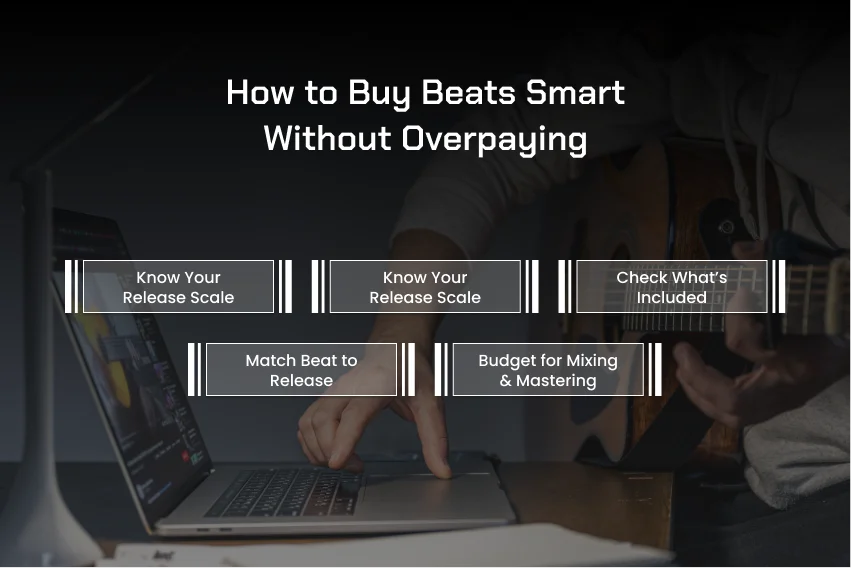
Step 1: Know Your Release Scale Before You License
Before you buy, estimate your distribution reach honestly. If you’re a new artist with a small following, a basic lease is fine for early singles. If you’re actively promoting something, get the unlimited license at minimum. If you’re pitching to a label or pursuing sync, go exclusive.
Step 2: Read the License Agreement
Every reputable beat store includes a license agreement with your purchase. Read the stream caps, the unit caps, the permitted uses, and the royalty split terms. If you cannot find a license agreement, do not purchase from that store.
Step 3: Check What’s Included in the Package
Trackout stems are essential for proper mixing. If stems are not included in your lease or exclusive purchase, your mix quality will suffer. At JBZ Beats, unlimited licenses and exclusives include stems as standard, plus free mixing and mastering on your finished track.
Step 4: Match the Beat to Your Release Type
Do not spend $199 on an exclusive for a freestyle you’re posting to social media. Do not spend $29 on a basic lease for a track you’re pitching to a major. Match the license tier to the commercial intent of the release.
Step 5: Budget for Mixing and Mastering
Even the best beat sounds mediocre with a poor mix. If your licensing budget is tight, buy the unlimited lease and allocate the savings toward a professional mix. JBZ Beats includes free mixing and mastering with every purchase, which removes this cost entirely.
Conclusion
Beat licensing at JBZ Beats is not just paperwork. It determines your rights on streaming platforms, your flexibility with labels, and your protection against content ID conflicts that can derail your release. Before you buy rap beats for your next project, take five minutes to understand what you are actually buying. Find the right beat and license for where you are in your career.
FAQ
Exclusive vs non-exclusive beat licenses: differences?
A non-exclusive license lets you use a beat commercially while the producer continues selling it to other artists. You’re renting access to the instrumental. An exclusive license removes the beat from sale after your purchase, meaning no other artist can record over it commercially. Exclusive rights give you sole use of that instrumental for your releases, which eliminates content ID conflicts and gives you a clean chain of title for label deals and sync placements.
Can I upgrade from a lease to exclusive rights later?
Yes, most producers allow you to upgrade from a non-exclusive lease to exclusive rights at a later date, but only if the exclusive has not already been sold to another artist. The upgrade price is typically the exclusive price minus any amount you already paid for the lease. If you know a track has commercial potential, it is often smarter to buy exclusive from the start rather than risk losing the option.
How do streaming royalties work for online beats?
When you record over a beat and release commercially, streaming royalties are split between the recording and the composition. The producer retains composition rights and receives their share of publishing royalties through their PRO, regardless of whether you have an exclusive or lease. Your exclusive license gives you sole recording rights but does not typically include a publishing buyout unless that is explicitly stated in your agreement.
Are non-exclusive trap beats safe for major releases?
Non-exclusive trap beats carry more content ID risk on streaming platforms because multiple artists may be releasing tracks on the same instrumental simultaneously. For singles you are actively promoting or targeting for playlist placement, an exclusive license is significantly safer. Basic non-exclusive leases are better suited for mixtape cuts, freestyles, and early-career content where the stakes are lower and the promotional budget is limited.
How much do exclusive beats cost at JBZ Beats?
JBZ Beats offers catalog exclusive hip hop beats starting at $99-$199, which includes MP3, WAV, and trackout stems with unlimited commercial use. This is well below the industry standard of $300-$500 for exclusive rights at comparable quality. Custom exclusive beats produced from scratch for your project start at $499. Every purchase includes free professional mixing and mastering on your finished track.

