
The math behind a successful music career has shifted. Spotify, Apple Music, and Tidal now reward artists who release consistently, not those who drop one album every two years. That’s a huge break for independent artists.
Building a deep catalog used to require a major label budget or years of slow saving. Today, affordable exclusive beats purchased through platforms like DistroKid have rewritten those rules. You can own every track and release on your timeline.
This guide covers the economics of releasing 12 or more tracks per year using affordable exclusives. You’ll learn how cheap exclusive beats help your catalog compound royalty income over time.
Key Takeaways
- Streaming algorithms favor artists who release new music every four to six weeks consistently
- A 12-track annual catalog using $99 exclusives costs roughly $1,188 total for full ownership
- Each new release triggers fresh algorithmic placement in Discover Weekly and Release Radar
- Catalog tracks continue earning royalties long after release, creating compounding income
- Exclusive ownership means no stream caps, no licensing conflicts, and full commercial rights
Why Your Release Frequency Matters for Streaming Growth
Dropping music once or twice a year used to be standard. Labels controlled release windows, and artists waited months between singles. That model doesn’t work for independents building momentum in 2026.
Spotify, Apple Music, and Tidal all prioritize fresh content in their recommendation engines. Every new release gives you another shot at algorithmic playlists. Monthly releases mean 12 chances per year.
“Streaming data demonstrates listeners are 67% more likely to save tracks from artists with consistent release patterns.” – Artis Track, Consistent Releases and the Spotify Algorithm
Release Frequency and Streaming Growth
Artists who release new music every four to six weeks maintain over twice the monthly listener count compared to those who release every three to six months.
The link between frequency and growth isn’t just theoretical. Independent artists on Spotify report measurable jumps in monthly listeners after switching to a regular release schedule. More tracks mean more entry points.
That frequency requires a steady supply of beats you actually own outright. Leased beats come with stream caps and shared usage rights that can derail your entire momentum during an important growth phase.
Cheap exclusive beats give you full ownership at a price that supports monthly drops without draining your budget. No caps, no conflicts, and no renegotiations.
Read More About What Makes Exclusive Beats More Valuable Than Free Beats in the USA?
How Do Streaming Algorithms Actually Reward Consistency?
Algorithms don’t pick favorites randomly. They respond to measurable engagement signals that your release schedule directly influences. Understanding those signals helps you plan drops for maximum support.
Spotify recommends releasing new music every four to six weeks. That cadence keeps you visible in Release Radar, which pushes your latest single to followers. Discover Weekly then picks up tracks with strong save rates.
Save Rates and Repeat Listening
According to Chartlex data from over 1,200 artist campaigns, the algorithm weights save rate and repeat-listen ratio roughly three times higher than raw stream volume on any given day.
Tracks with a save rate above 20 percent consistently trigger algorithmic playlist placement within 10 to 14 days. That save rate matters more than any single day’s stream count for long-term visibility.
Active Profile Signals
Platforms treat your artist profile like a living entity. Regular releases signal that you’re an active creator worth recommending. Long gaps cause the algorithm to push your profile down in favor of consistent artists.
“In the fiercely competitive world of independent music, consistency is a key currency. Algorithms on Spotify, TikTok, and YouTube reward artists who show up week after week with quality content.” – Venture Music, Planning a Consistent Release Strategy
Budget-friendly production becomes essential here. You can’t maintain a monthly release schedule if each beat costs $500 or more. Affordable exclusives at $99 per track keep your pipeline full without draining your resources.
|
Start Building Your Release Calendar Today Browse hundreds of beats across trap, hip hop, boom bap, and R&B starting at $99 per track. |
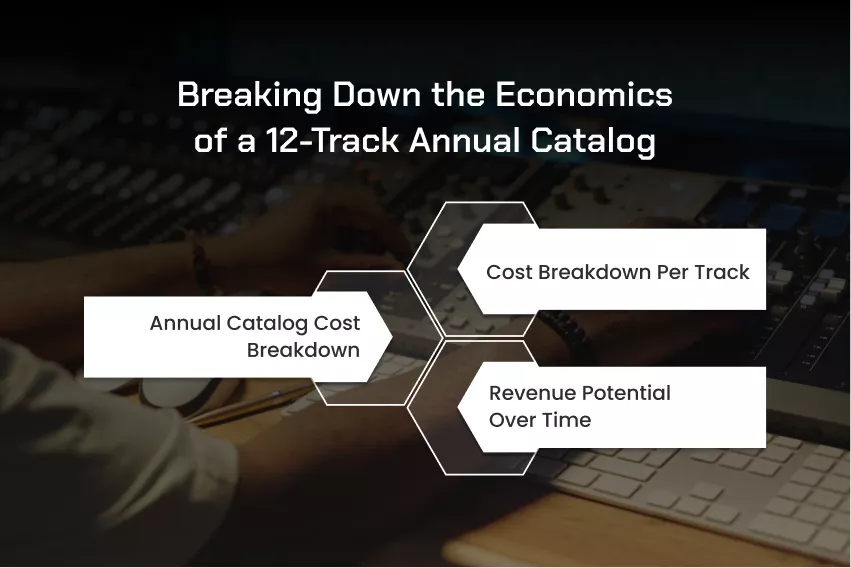
Breaking Down the Economics of a 12-Track Annual Catalog
Numbers tell the real story here. Let’s break down what it costs to build a 12-track catalog using affordable exclusive beats versus the traditional approach of expensive studio production with a famous producer.
Cost Breakdown Per Track
- Beat purchase (exclusive rights at $99): $99
- Mixing and mastering (average independent rate): $150 to $300
- Distribution through DistroKid or TuneCore: roughly $20 to $35 per year for unlimited releases
- Total per track: approximately $249 to $399
Annual Investment for 12 Tracks
Annual Catalog Cost Breakdown
A full year of exclusive beats, mixing, mastering, and distribution runs roughly $2,988 at the low end, compared to $2,000 to $5,000 for a single studio track with a name producer.
At the low end, 12 tracks cost around $2,988 total. That includes beats, mixing, mastering, and distribution. Compare that to a single studio session with a name producer, which can easily run five figures.
Exclusive beats for sale at the $99 price point make this math work for artists earning from day jobs, gigs, or early streaming revenue. You get full ownership without negotiating backend points.
That ownership means you don’t share royalties with beat lessors or co-owners. Every stream and every sync fee goes directly into your pocket from day one with no backend surprises when a track takes off.
Revenue Potential Over Time
Spotify pays independent artists between $0.003 and $0.005 per stream on average. According to Ditto Music, the 2026 average sits around $0.004 per stream.
A catalog of 12 tracks averaging 10,000 streams each generates roughly $480 annually from Spotify alone. That number grows every year as your catalog expands and older tracks keep collecting plays from algorithmic recommendations.
By year three, a 36-track catalog could generate $1,440 or more annually from Spotify alone. Add Apple Music, Tidal, YouTube Music, and Amazon Music to the mix, and total income climbs significantly higher.
Finding buy exclusive rap beats at budget-friendly prices is the first step toward making those numbers a reality. Affordable exclusives turn a modest investment into compounding returns.
What Makes Affordable Exclusive Beats Better Than Leases
Every budget-conscious artist asks this eventually. Leased beats cost less upfront, sometimes $25 to $50. But that lower price comes with restrictions that undermine a high-frequency release strategy.
Leased beats typically cap your streams at 10,000 to 500,000 depending on the license tier. Hit that ceiling and you renegotiate, pay again, or pull the track down. For artists building momentum, that’s a serious problem.
For an artist releasing monthly and building momentum, stream caps create a ticking clock on your best songs. Browse the full selection when you buy rap beats and compare pricing.
Ownership Differences
- Exclusive ownership means the producer removes the beat from their store permanently
- You receive all file formats including tracked-out stems for professional mixing
- No other artist can release music using your instrumental
- Zero stream caps or distribution limits on any platform
When you buy cheap exclusive beats at $99, you get the same ownership rights major label artists pay thousands to secure. The difference is the producer’s pricing strategy, not production quality.
“A realistic minimum budget for an independent album release in 2026 falls between $1,500 and $5,000, assuming tight planning, limited revisions, and disciplined track selection.” – Illustrate Magazine, The Minimum Cost of Recording an Independent Album
Browse genres like trap beats and boom bap beats to find styles that match your artistic direction. Mixing genres keeps your audience engaged.
Read More About Beat Purchasing: Bulk Beat Packages vs. Individual Purchases: Which Saves More Money?
Mapping a High-Frequency Beat Release Calendar for 2026
A release strategy without a calendar is just a wish list. Successful independent artists plan drops months ahead, aligning releases with promotional windows and seasonal listening trends. Structure beats chaos every time.
Monthly Single Strategy
The simplest approach drops one single per month on a consistent day. Friday is the industry standard because streaming platforms refresh editorial playlists then. Pick a rhythm, like the first or third Friday of every month.
Quarterly EP Bundles
Another approach releases singles monthly but bundles every three or four tracks into an EP. This gives you the algorithmic boost of frequent singles plus the play consolidation that comes with a unified project page.
Steps to Build Your Release Calendar
- Select 12 exclusive beats that span at least two or three subgenres for catalog variety
- Record and mix tracks in batches of three or four to save on studio session costs
- Schedule distribution uploads at least two weeks before each release date for playlist pitching
- Submit each single to Spotify editorial playlists through Spotify for Artists during that window
- Promote each drop with a short content cycle across Instagram, TikTok, and YouTube Shorts
Stock up on hip hop beats and trap beats in advance so you never scramble for production. Having beats ready removes the biggest bottleneck.
|
Need a Beat That Fits Your Exact Vision? Commission a custom beat built around your style, tempo, and creative direction. |
Can a Deep Music Catalog Generate Long-Term Royalty Income?
Yes, and the compounding effect is what makes this strategy genuinely powerful. Every track you release becomes a permanent asset in your streaming catalog. Royalties trickle in continuously from every track you’ve ever released.
Spotify paid out $11 billion to rights holders in 2025 according to Spotify Newsroom. Independent artists and labels took roughly half those payouts.
That pool of money grows every year as global subscriber counts climb past 250 million premium users. More subscribers means a larger royalty pool for catalog owners collecting streams across every track.
How Compounding Works in Practice
Your first year with 12 tracks might generate modest streaming income. Year two adds another 12, but your original catalog is still earning. By year three, you’ve got 36 tracks working simultaneously.
Each track collects streams from algorithmic recommendations, playlist placements, and organic search. Need something tailored? Custom exclusive beats let you build around your exact vision.
Multiple Revenue Streams Per Track
Streaming royalties are just one income channel. Each exclusive track can also earn through sync licensing for video content, YouTube Content ID monetization, and performance royalties collected by your PRO.
Owning the masters through exclusive purchases keeps 100 percent of those earnings in your pocket. No splits with labels, no backend negotiations, and no surprise deductions from a co-owner down the line.
Catalog Compounding Explained
Every beat you own keeps earning through streams, sync licensing, and Content ID long after release, turning a one-time $99 purchase into years of recurring income.
Artists who build catalogs using exclusive beats for sale at affordable prices set themselves up for this compounding effect. The $99 you spend today could generate returns for years.
Read More About Branding With Beats: Building a Brand Around Your Exclusive Beats
Picking the Right Beat Genres to Maximize Your Catalog Mix
A catalog full of identical-sounding tracks limits your reach. Smart artists diversify their production choices to cast a wider net across streaming audiences. Genre variety also protects you from shifting trends.
Strategic Genre Mixing
Hip hop listeners rarely stick to one subgenre. Someone who loves aggressive trap also vibes to melodic beats and classic boom bap. Building a catalog that spans multiple styles means your artist page appeals to broader algorithmic recommendations.
Explore boom bap beats alongside modern trap to create contrast in your catalog. That variety signals to algorithms that your music appeals to diverse preferences, which triggers wider recommendations.
Matching Beats to Content Seasons
Summer months favor uptempo, energetic production with heavy 808s and festival energy. Fall and winter lean toward moodier, atmospheric instrumentals. Seasonal timing matters for your release strategy.
Planning your beat purchases around seasonal listening habits gives each release a better shot at connecting with listeners. Pairing affordable exclusives with seasonal timing maximizes engagement from day one.
Consider grabbing hip hop beats that fit your planned release windows rather than buying everything at once. This lets you match production to trending sounds closer to each drop date.
“Establishing a predictable release cadence trains your audience to anticipate and engage with new material regularly.” – AMW Group, 20 Proven Music Release Strategies
|
Browse Beats by Genre and Find Your Sound Find beats that match every mood and style in your release calendar. |
Conclusion
The streaming era has handed independent artists a blueprint that works. Release consistently, own your masters, and let your catalog compound over time. Affordable exclusive beats make that blueprint realistic.
A 12-track annual strategy on $99 exclusives costs less than most artists spend on a single music video. The return on that investment grows every year as algorithms keep surfacing your tracks to new listeners.
JBZ Beats has been helping independent artists own their sound since 2010 from Traverse City, Michigan. The $99 exclusive model exists specifically to make this release strategy accessible to every budget level.
Stop waiting for the perfect moment and start stacking tracks. Get in touch to discuss custom production or browse the catalog to find your next release today.
FAQ
How many tracks should an independent artist release per year?
Most music industry professionals recommend releasing at least one single per month, totaling 12 tracks annually. This cadence aligns with Spotify’s recommendation of new music every four to six weeks. Monthly releases keep your profile active in algorithmic recommendations and give you consistent opportunities to land on Discover Weekly and Release Radar playlists throughout the year.
Are $99 exclusive beats good enough for professional releases?
Price does not determine production quality. Many experienced producers offer affordable exclusives to attract independent artists and build long-term relationships. A $99 exclusive beat from a producer with 10 or more years of experience can sound just as polished as beats costing $500 or more. Always preview the full catalog and check the producer’s track record before purchasing.
What happens if my leased beat hits the stream cap?
When a leased beat reaches its stream limit, you must either upgrade to a higher license tier, renegotiate with the producer, or remove the track from streaming platforms entirely. This can disrupt your momentum during a critical growth phase. Exclusive beats eliminate this risk completely because they come with unlimited streaming and distribution rights from day one.
How long does it take for a music catalog to generate meaningful royalty income?
Most independent artists begin seeing compounding royalty income after building a catalog of 24 to 36 tracks over two to three years. Each track continues earning streams from algorithmic recommendations and organic discovery long after release. The key is consistency because early tracks build the foundation that supports everything released after them.
Can I use exclusive beats across multiple streaming platforms simultaneously?
Yes, exclusive ownership grants you full distribution rights across every streaming platform, including Spotify, Apple Music, Tidal, YouTube Music, Amazon Music, and any future platforms. You also retain rights for sync licensing, Content ID monetization, and live performances. There are no platform restrictions or geographic limitations when you own the exclusive rights to a beat.

